
Does Maine Show How Future Voting Will Not Follow Trump’s Model?

Trump and his pack are gloating over the victory of his right-wing sycophants in the Supreme Court.
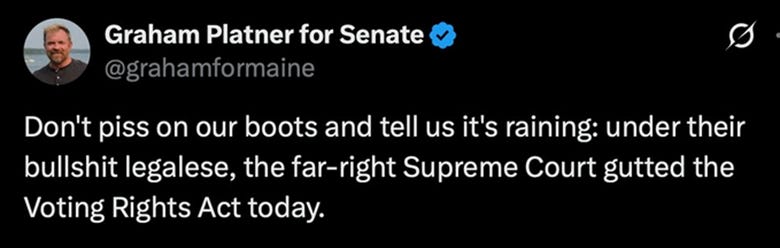
They have just ditched a provision of the Voting Rights Act to make it harder for minorities to challenge electoral maps as racially discriminatory under a 1965 law. The Court ruled that a map that created two Black-majority congressional districts in Louisiana was unconstitutional, and that states could not make voting maps that diluted the voting strength of minority communities. John Roberts has been working to dismantle the Voting Rights Act for 45 years, and the recent ruling was his triumphant high point - the culmination of his project.
It’s not like we weren’t warned…
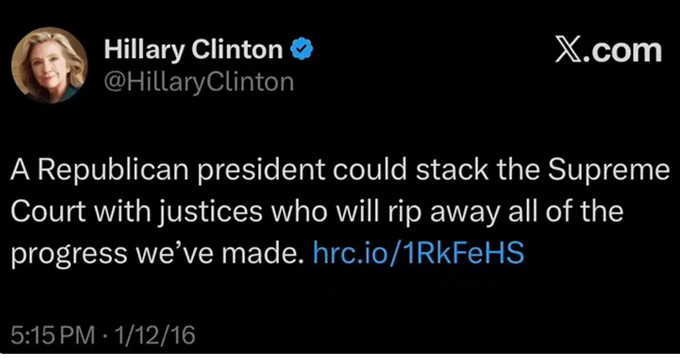
But what if that doesn’t matter?
What if people’s disgust with Trump and his current politics is so ingrained and deep that voters are moving to a different beat altogether?
What if the well-heeled political parties have totally misjudged the public now, and that the best model we could look at is Mamdani’s election in NYC?
We are under levels of pressure that would make the question reasonable.
“Stressful” and “challenging” are the words that two-thirds of Americans use to describe 2026 thus far. They point to the weight of financial pressure and a sense that no one is steering the ship.
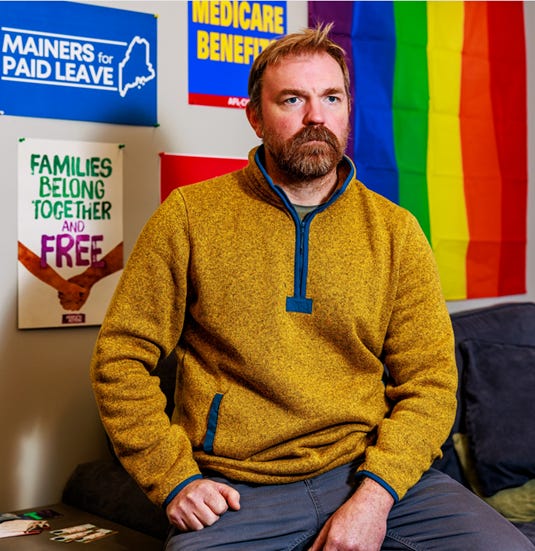
One of the political candidates who is stepping forward with a positive solution just had his path cleared when his rival, Governor Janet Mills, decided to pull out of the race and let Graham Platner run for the Senate in Maine.
Platner, 41, is a lobster fisherman and former US Marine.
This is a blow to Senator Chuck Schumer of New York and the Democratic Party establishment that he leads.
Platner is more of a Mamdani candidate: not restricted by party lines and willing to reach out to more leftwing models of growth.
Platner spoke with Jon Stewart about his return from the Marines and his work as a bartender in Washington, where he was crushed with disillusionment. He recovered as a lobster fisherman on the coast. Instead of being captured by the anger of the MAGA movement, he stayed open to the experiences of other people. The average American is a pretty wonderful person, he decided, but some of the elected officials are warped.

A method of changing that is to copy Roosevelt’s New Deal method, where he threatened to pack the Supreme Court to ensure that his policies went forward. The Court immediately changed its mind and backed his programs. It’s amazing what a push from the people will do to established positions. Before that, in 1928, he criticized the Democrats for not having a theory on how to get ahead – a problem he solved.
We can use that blueprint to move ahead today: to dissolve massive wealth concentrations and move fast on social programs.
It means doing more than going back to what we had: we need to re-invent the democratization of our economy.
We need to avoid the crystallization of power about companies like Palantir, which puts its funds into political capital.
We need to recognize that housing, jobs and wealth equality are absolutely needed.
To make this a political lever, we need to connect money with value that people can see. Many Democrats do not actually want this to happen, because they are transactional political animals as well. They do not want to think big. “We know how the system works; we know the system.”
But this is not in the service of a greater goal.
We need a lot more “normal people” in politics…people who have tried to figure out how to make life work.
We are living in the “material realities of policy”.
We need new candidates who can translate life into outcomes.
The way that corporate lawyers write laws to benefit their clients.
But, says Platner, we have never changed the laws to obtain good outcomes just because the institutions decided to do it. They needed to be pressed. The Labor movement was crushed because it favored change. We need to build the opposite of the candidates that the democratic party pushes forward. We need an infrastructure to make it happen; to put normal people into positions of power. Palantir for example put $2-million into a campaign against Platner.
Voters have no idea of what they need to build. We need to fight back against a corporate view of our society, where we become robotic ‘customers’ instead of citizens. We need the political will to enact Universal Healthcare, for example.
The only way to go after consolidated power is through government...and good government is possible, as the northern European countries demonstrate.
Platner considers himself an ideological ally of Senator Bernie Sanders of Vermont and is running as an economic populist.
This means he dislikes what the Supreme Court has done, but he has plan to negate the effect.
If given the choice, people will vote for Sanders and AOC and Mamdani. People just have to be shown, clearly, what the difference is between the candidates.
The ‘politics as normal’ candidate of Republican or Democratic cast is often hard to tell apart. Billionaires own both. Most people don’t know what “billion” means. It is a long way from “million”. A million seconds is 12 days long. A billion seconds is 32 years long. People need to be able to process these numbers. Abstract, distant concepts produce weaker emotional responses and weaker political will.
For example, prices of tickets to see a FIFA World Cup game are in the realm of $7,000. Gianni Infantino, lead of FIFA, thinks that is a reasonable price; he is a friend of Trump (remember the FIFA Peace Prize?) so he gets no push-back. Generally, only governments have to power to push back.
Which they are doing in NYC.
Mayor Mamdani has announced that all official 2026 FIFA World Cup Fan Fest events in New York City will be free this summer.
“If the best things in life are free, so too should the World Cup fan experience,” stated Mamdani, who is a devoted soccer fan himself. “These events were not initially set to be free, but the world’s game should belong to the world.”
The Canadian city of Toronto is also offering a free 22-day FIFA Fan Festival that offers public viewing of matches, live performances, cultural programming, art and food. But Canadians are known to be raving socialist lunatics.
This is the kind of public policy outcome that people were hoping for when they fought the traditional candidates and voted for Mamdani. You feel like saying to voters across the US: “See, that wasn’t too hard.”
If we taxed all 924 billionaires in the US at only 10%, there would be enough money to pay for affordable housing, medical debt and education.
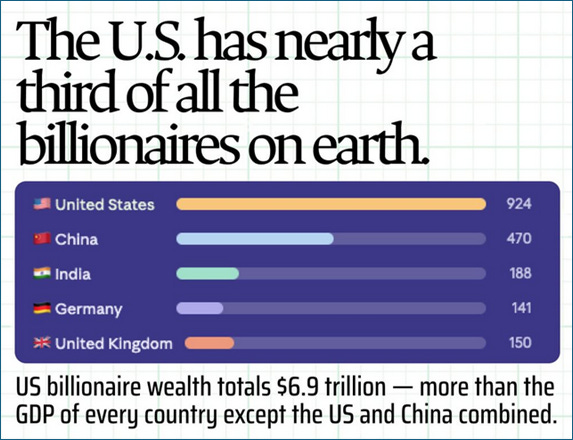
And they could afford it…after taxes they would still be billionaires in a time when corporate wealth is soaring. Not only are profit margins about to hit a 17-year high, but thanks to Trump’s tax cuts, 88 of the largest companies in American paid zero in federal taxes despite $105-billion in profits.
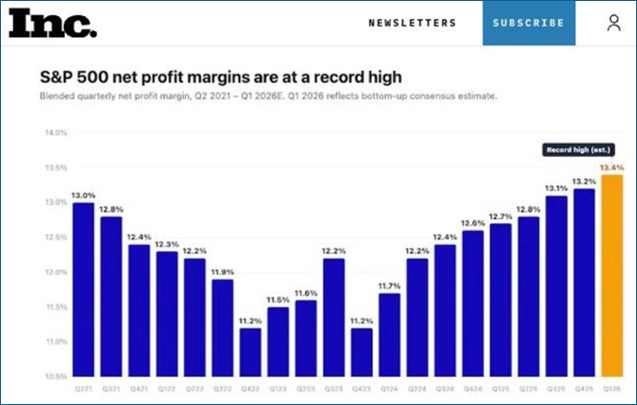
No wonder voters are feeling stressed, because this is not being passed along to them.
If the political parties continue to be run by Establishment professionals, then people will not get a chance to change the billionaire play-book.
But if voters can be motivated to get off their sofas and vote, their world will change.
America is a nation of left-wing-leaning voters.
The more who come out to vote, the more apparent this becomes.
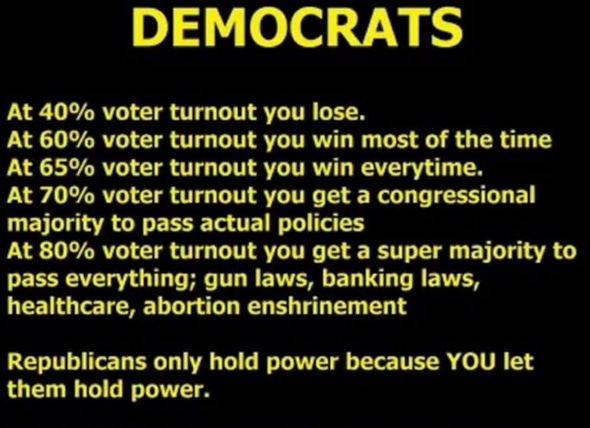
This chart is slightly off - there was a 65.1% turn-out in 2024 and Harris still lost by a bit – but the overall trend is right: the more people who turn up, the more they lean left.
Maine has a split Senate delegation, with Susan Collins taking a Republican seat. The rising poll numbers are large enough that they indicate not only a complete victory for the Democrats in Maine in November, but also for the other seats across the country.
In a word, it doesn’t matter what Trump’s lackeys have done in the Supreme Court – the Republicans have very little time left in Washington.
According to The Hill, a generic preference for Democrats puts them ahead of Republicans by 10 points. That’s a growth of three points from the month before. The Democrats are on a rising trend.
G. Elliott Morris has detailed polls that forecast a brutal midterm (and perhaps beyond) for Republicans. Trump’s numbers keep getting worse. His approval is at an all-time low of 35% - as is that of the Democrats. People don’t know what they stand for, because they have not spelled out a Mamdani-type position to the electorate. Even so, only one percent say they are so unhappy that they won’t vote.
Half of Americans expressed generic criticism of both political parties, and said that everyday economic life was getting too expensive, or wanted greater support for social programs like Medicare and Social Security. Most voters just want a party that has a plan to make everyday life less of a struggle.
“The biggest risk for Democrats isn’t being perceived as extreme…it’s failing to show everyday Americans that it cares about them and will fight for them,” says Morris.
The Democrats are on their way to retaking Congress and electing Democratic president. With Graham Platner as a model, they will enlarge the Supreme Court in order to reverse the democracy-threatening rulings that it has passed.
Robert Hubbell lists the ten cases that need to be over-ruled first:
Citizens United (money in politics),
Trump v. US (presidential immunity),
Dobbs (overruling Roe),
Callais (partisan gerrymandering allowed as cover for racial gerrymandering),
West Virginia v. EPA (major questions doctrine),
303 Creative LLC v. Elenis, (allowing discrimination against same sex couples),
United States v. Skrmetti (ban on gender affirming care for trans youth),
Heller (individual right to bear arms),
NY Pistol v. Bruen (right to carry firearms in public),
Garland v. Cargill (automatic rifles with bump stocks are not machine guns).
If an expanded Supreme Court could overrule those ten cases, we can erase the poison that has been infected into our system.
In the meantime, the ‘Platners’ among the new politicians will give us an even society so we can all move forward with less stress and a positive social outlook – built on a foundation of contributions from billionaires.
Thank you for following Barry’s Substack, focusing on the meaning behind the headlines. A regular summary of a topical book every few weeks helps full subscribers stay ahead of the conversation.
PS - If you have enjoyed this article, please subscribe or consider buying me a coffee.
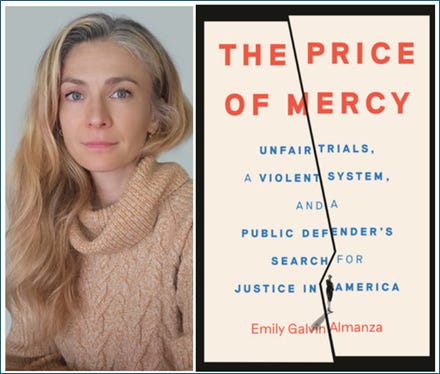
In the next two weeks we will look at The Price of Mercy – Unfair Trials, a Violent System, and a Public Defender’s Search for Justice in America.
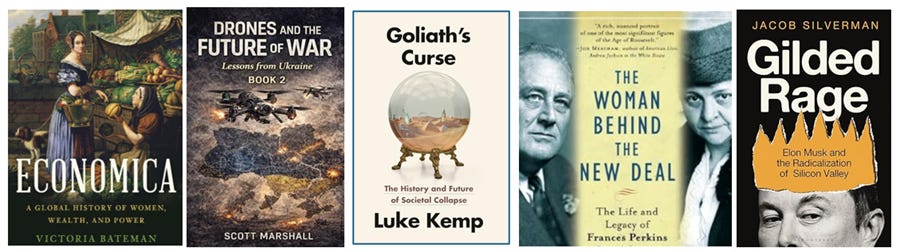
Recent features have delved into:
Maine does have the ability to come first in terms of progressive thinking. I live in Santa Barbara now, I lived in Maine in the 1990's. Maine tends do it's own thing on the national stage that is different than anything the Republicans do now. I think it is a matter of time..
Before you celebrate Mills withdrawal, ask : “Can Planter win?”. I don’t know the answer, but if he loses to Collins, you’ve written an irrelevant article. The same is true of course with the rest of the US.