
When Twilight Becomes Sunrise – Get Ready For An Age-Free Life

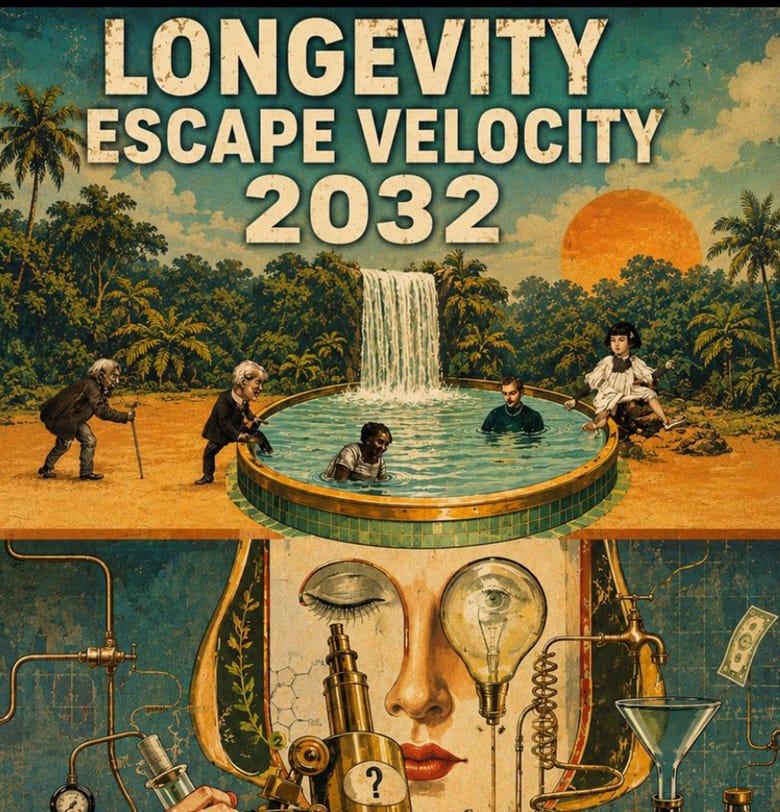
Futurist Ray Kurzweil has an enviable record for forecasts: He predicted the Internet, smart phones and AI.
He recently doubled down on his forecast that we have a reasonable chance of escaping the previously inevitable doom of death by old age.
He says that the death of death will happen by 2032.
In six years.
Within six years, there will be treatments available that allow you to become younger.
Whether it happens in 2032 or 2033 or 2034 is immaterial…the inescapable fact is that our life horizon is about to lift!
Sounds like a fairy tale? Impossible?
So was the moon landing.
Yet that impossible feat – out of human reach and even comprehension for everyone living since we evolved on the pains of Africa a million years ago - happened in our lifetime.
Ours! Not the time of the pharaohs of Egypt or the Kings of England or the Emperors of China, but humble little US!
A stunning “first”! In fact, the first sign to an alien species that there was intelligent life on the planet: we left footprints on our neighboring planetoid.
And Kurzweil is talking about something that is not just a delay of old age - it is the reversal of old age, and its replacement by the resilience, bounce and joy of youth!
Sound insane?
Kurzweil is a brilliant man - one of the world’s leading inventors, thinkers, and futurists, with a thirty-year track record of accurate predictions. He is an American computer scientist, entrepreneur, futurist, and inventor. He is involved in fields such as optical character recognition (OCR), text-to-speech synthesis, speech recognition technology and electronic keyboard instruments. He was awarded the National Medal of Technology and Innovation, the United States’ highest honor in technology. He is also an author, and I have reviewed his books like “The Singularity Is Nearer”, and watched his forecasts come to pass.
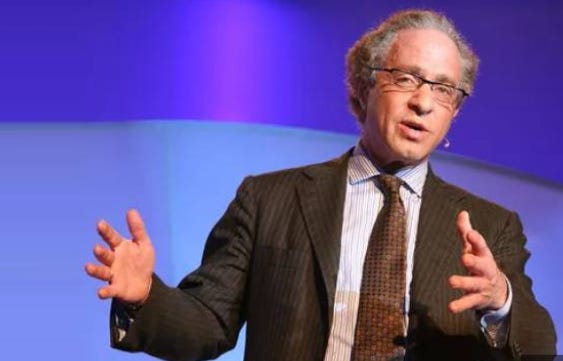
He details his reasons for selecting that date, based on exact data trends.
Here is the central idea:
“If you can live long enough for anti-aging research to start adding at least one year to your remaining life expectancy annually, that will buy enough time for nanomedicine to cure any remaining facets of aging. This is longevity escape velocity.”
There are three main steps up the ladder to prolonged life:
The Law of Accelerating Returns: Kurzweil bases his predictions on the concept that technological progress—especially in computation, genetics, and nanotechnology—doesn’t advance linearly, but exponentially. Exponential progress is something that is very hard to grasp, but in my lifetime I have watched it work in many fields.
Exponential Drug Discovery: He observed that AI integration into medical research is massively reducing the time it takes to model human proteins, sequence diseases, and test billions of molecular structures. He calculated that this accelerating pace will intersect with human biology in the early 2030s.
Reversing Biological Loss: Currently, human biology loses about 5 months of life expectancy for every chronological year lived, because our bodies can’t outpace aging. Kurzweil used trend lines to calculate that AI and nanotech (like molecule-sized robots in the bloodstream) will compress and eliminate this gap by 2032.
He calculates that by 2032, biotechnology will enter the “knee of the curve”—the phase in exponential growth it explodes upwards, delivering centuries of progress in a matter of months.
The turning point for medicine, he observes, occurred with the decoding of the human genome. By turning biology into data, healthcare began inheriting the exponential scaling laws of computation (similar to Moore’s Law, where the number of transistors in an integrated circuit (IC) doubles about every two years, with minimal increase in cost.)
This will be greatly boosted by AI, which can now simulate drug-protein interactions virtually. They screen billions of molecular compounds in days instead of years, radically compressing the timeline and making a ‘2032’ date realistic.
Longevity escape velocity is a mathematical crossover point involving two moving variables: chronological aging and medical extension.
[Average Life Expectancy Added Per Year] > [1 Chronological Year Lived]
The Present Deficit: Currently, for every calendar year you live, global medical advancements add roughly several weeks to your remaining life expectancy. You are still net-losing time.
The 2032 Crossover: Kurzweil’s trend lines show that by 2032, the line representing “years added by technology” will cross the threshold of 1.0. At this exact point, a person living through one calendar year will see their statistical life expectancy increase by 13 or 14 months, achieving a net gain in remaining life.
He adds that in addition to AI, we will be served by nano-sized robots circulating in our bodies like ne-fangled red blood cells, augmenting our immune systems, targeting cancer cells directly, and repairing cellular damage from the inside out.
I have been following Kurzweil for decades, and his utterances are solid. I believe this guy.
Why?
Because I have been tracking the progress of ‘youth-making’ developments myself, and they are following his thoughts.
I am not a medical journalist, nor a scientist. I am, I guess, a diarist, watching life’s shadows move across the wall. Like you, I see patterns. And like you, if I am looking for a pattern, I have to constantly warn myself to beware of false matches; you can usually find a match if you are looking hard enough, but that does not make it right. The pattern, in a word, may not be factual – merely that you have found what you have expected to find. And this is the hardest part of the puzzle: you have to be willing to be stern and disciplined about what you are seeing. Fiction is not helpful. Reject the false shadows.
So I invite all of you to start tracking this “return to youth” news, and make up your own minds.
I will jot down a few of my observations and share them.
But first, what is Kurzweil’s observation?
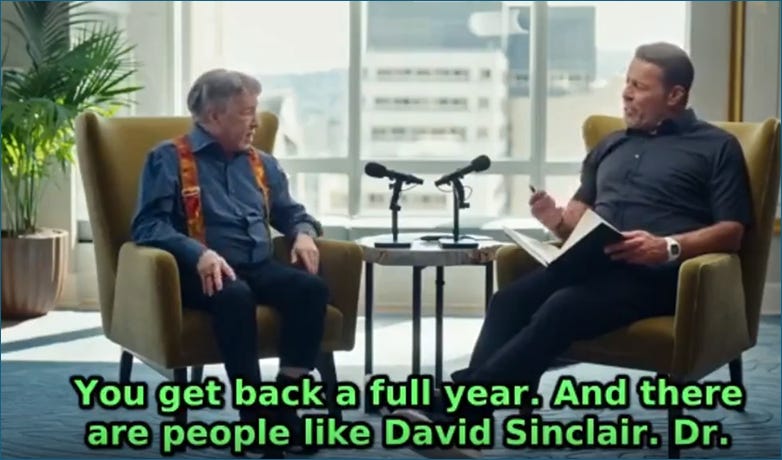
Kurzweil observes that right now, for every year you live, you get back approximately five months of life expectancy from medical and scientific progress. This means that you are losing roughly seven months of net life per calendar year. Not good, but better than it had been before, when our forefathers got back nothing.
Longevity escape velocity is the point at which you get back a full year or more from scientific progress for each year you live, meaning your biological clock starts running backward.
The key mechanism is AI-driven drug discovery - discovery at a scale that was physically impossible five years ago. A recent paper (today, in fact), showed that artificial intelligence is ushering in a new era for pharmaceutical development – one where data-driven algorithms work hand-in-hand with human expertise to dramatically speed up the journey from lab discovery to market launch.
Even without AI, the process of escape velocity was ongoing – it just was not moving as fast.
By 2030, Kurzweil argues, AI will be able to take a biological problem, generate millions of potential drug candidates, screen all of them, and run trials on simulated digital populations compressing decades of clinical research into weeks.
This is already happening.
David Sinclair’s lab at Harvard used AI to virtually screen 8 billion molecules against aging targets and is now preparing human trials moving from $400,000 gene therapies toward a $100 pill that can reset biological age by 50 to 95% in four weeks.
Sinclair has already demonstrated the ability to reverse aging in mammals restoring sight in mice with optic nerve damage and reversing Alzheimer’s symptoms in lab models.
When this happens, it will upset a lot of people who hate life.
There are the professional pessimists, the doom-sayers, the people who obtain their energy by gleefully sucking the happiness out of others.
I call them spiritual vampires, and have come to ignore them.
I have spent too much time in my life worrying about death, and about being gone. Since I was a boy.
So I have answers for the objections.
Some say that ending death by old age will lead to an onslaught of over-population, for example.
But right now, as it turns out, we are close to a time-line that forecasts a terrible under-population of the world. We just are Not reproducing fast enough.
Right now, Western populations are declining. There is a demographic shift driven by fertility rates falling below the replacement level of 2.1 births per woman. As societies urbanize, education expands, and the cost of living increases, natural population growth—births minus deaths—has stalled or turned negative. The rest of the world is approaching this “stall speed” as well, and it won’t be long before humanity reaches a zero-growth – or even deficit growth – number.
But if we eliminated old age, the world’s population might grow by 100,000 people a day.
No one dies of old age, actually – they die of chronic illnesses brought out by old age. Some 150,000 people pass daily, and we can assume that 100,000 (about 73%) die from age-related causes. If that were to stop, the Earth would gain another 36.5-million people each year.
Another 36.5-milion people a year will be a literal bonus!
Can the Earth’s resources support it?
Each year humanity uses less and less material to produce the goods, food and energy that we need. We are learning to do more with less material. A green electric economy looks very different from a carbon-based extracting economy. A computer chip is a piece of engraved sand. We will be printing much of our own products in our homes on atom-grained devices. Amazon will have nothing to sell. AI will be used to distribute production power to the people, eliminating the elites and their hoarding. This will be an overthrow world.
Will this treatment cost a fortune or contribute to healthcare cartels?
It is hard for Americans to grasp, but most of the world does not have a profit-drive healthcare system.
If a treatment for old age is available – one that slashes the immense cost of growing old, with attendant illnesses – then countries like Sweden and Norway and Canada and Germany and France and Britain will latch onto it right away. It will be as close to free as possible.
Whether the US can stand aside and let everyone else live, is up to your politicians. But I’d hate to be the Republican who says that Youth it is not good for business, so it won’t happen. And BTW, Mexico now has universal healthcare. There are no excuses for the US.
Then there are those who say that living for 300 years or whenever is not appealing.
Fine.
Die whenever you want.
I’m not the Entertainment Director on your cruise through life…end your life when you want. Suit yourself. If you decide to “go” – as a dose of reality - be aware that the clothes they bury you in, are probably already hanging in your closet.
I have my eye on a tropical island in the Pacific where I would happily spend 100 years just waking up each morning beside the lagoon, wondering about the rippling tides. And figuring out where my next century will take me.
The fact is that humans do not live very long.
Yes, I know we’re better off than Mayflies with their one-day limit, but humans are barely getting started on our journey when we are unhorsed by death.
My father lived to 103, and very much wanted to keep going. He was an inquisitive and kindly man, who enjoyed his days. He started poor, did OK in life, and was surrounded by a happy family. That makes a difference. He was, in a sense, pulled forward by life.
I myself have worked all my life. A portion of the taxes I paid went into a (Canadian) government account, and in a sense I am living off that interest now. It’s not a lot, but it’s all I need. And it would carry me over the next 200 or 300 years.
In fact, take a fast look at 200 years.
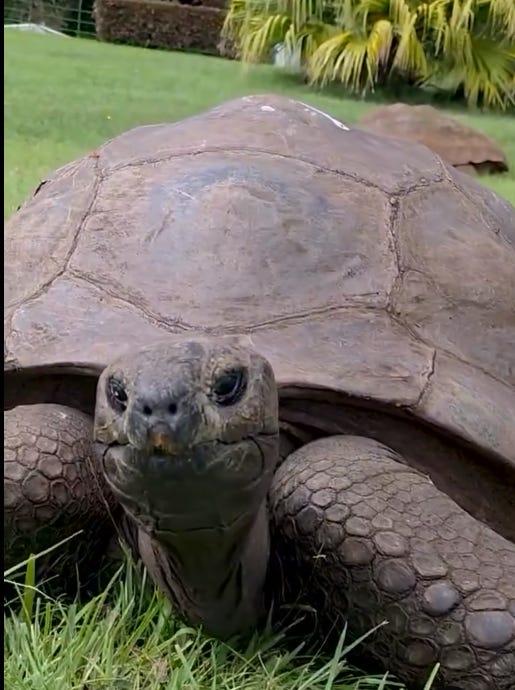
Guinness World Records has officially recognized that Jonathan, a Seychelles giant tortoise, is an icon.
Born in 1832, Jonathan is the oldest living land animal in the world.
He was born before the telephone, the light bulb, the automobile, and even before Abraham Lincoln became president.
He was born before the Eiffel Tower was built.
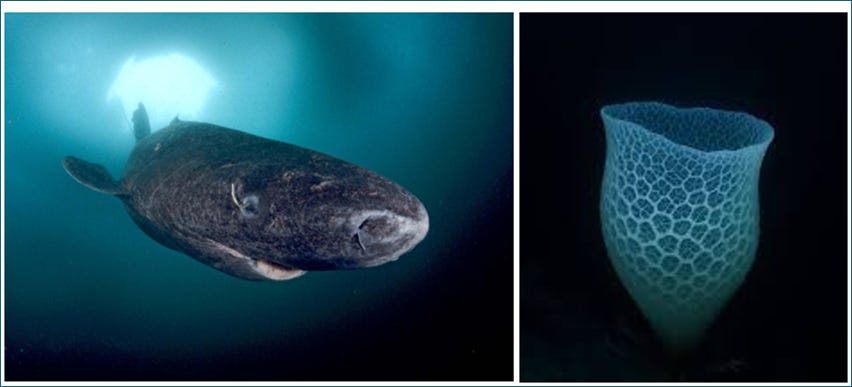
Underwater, creatures do even better. The Greenland shark can live 500 years. One of those could have been bon before the invention of the telescope. The deep sea glass sponge lives 11,000 years. One of those could have started life before humans invented agriculture.
And they may still be alive when Trump gets out of jail!
There are already signals that the longevity line is starting to curve upwards.
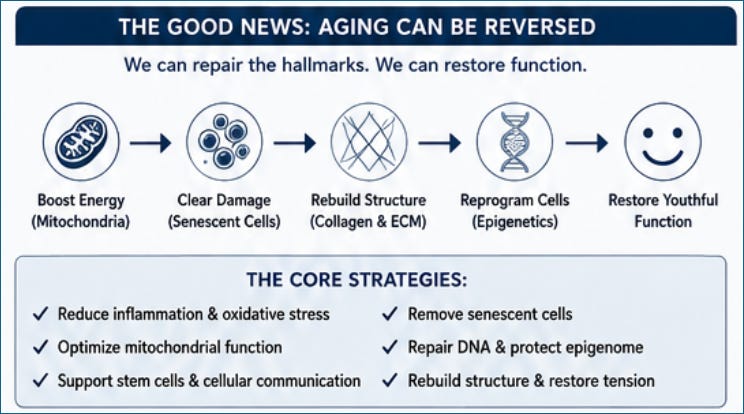
Kurzweil is not alone in his view; ageing could indeed soon be treated as a medical condition rather than an inevitable part of life, with scientists moving closer to reversing the biological clock, according to leading longevity researcher Professor David Sinclair. He and others like him say that humanity is on the verge of witnessing the most significant health transformation since the discovery of clean water and vaccines.
Here are a few of today’s baby steps forward:
· A clinical trial involving 14,000 participants is currently testing whether a 60 year old diabetes drug can extend human lifespan by up to 7 years. Metformin is not a new supplement. It’s not a biohacking protocol. It’s not a gene therapy. It activates AMPK, the cellular energy sensor that triggers cleanup and repair processes. It reduces IGF-1, a growth hormone linked to accelerated aging. It’s a pill that costs $4 a month and most doctors prescribe it without knowing what it does to aging. It may confine your life to the toilet with diarrhea, though, so improvements are needed!
· Rapamycin and NMN are two other drugs that longevity researchers are watching most closely. Rapamycin inhibits mTOR, a pathway that when chronically activated accelerates cellular aging. NMN raises NAD+ levels, which decline roughly 50% between age 40 and 60 and are central to DNA repair and mitochondrial function. I myself take Rapamycin as my only concession to drug use at this point; can’t say I’ve noticed any changes, but my dosage is very small.
· New research from the Texas A&M College of Veterinary Medicine and Biomedical Sciences (VMBS) suggests that regenerative abilities may not be entirely absent in mammals. Instead, they could be hidden within the body’s normal healing machinery, waiting to be activated.
· Tests are underway on partial DNA reprogramming, to nudge aged adult cells back in time, restoring features of young cells without pushing the old cells so far back that they lose their specialized identity. Optispan, a longevity-focused preventative medicine company in Seattle, is checking the safety of a new approach.
· Biotech startup NewLimit has secured a $435-million funding round to test a medicine that rewinds cellular aging in the liver.
· Researchers propose new framework to delay senescence by using CRISPR to enhance internal cellular maintenance and resist stress.
· Stem cell therapy is undergoing a clinical trial to reverse age-related vision conditions using resveratrol, which may finally deliver on its earlier promise.
And here is my favorite: researchers in Japan have been developing a medication that may allow people to grow new teeth, and they’re hopeful to have it ready for general use by 2030. This treatment focuses on a gene responsible for tooth growth and has begun in clinical trials.
I’m watching this development for a friend.
But speaking for all of us, before we were born, billions of years passed and we felt nothing. As the author Mark Twain once wrote: “Annihilation has no terrors for me, because I have already tried it before I was born—a hundred million years—and I have suffered more in an hour, in this life, than I remember to have suffered in the whole hundred million years put together.”
One day you appeared. One day you will disappear.
Between those two infinities of silence, we are given a brief moment to experience existence. If we can extend that moment to cross over to an era where human personas can reside in an undying medium like a digital extension, perhaps that would be a next step in our evolution. I don’t know, but we could give that a chance.
People have such a strong urge to live.
In the enlightened state of Oregon, after consultation with two doctors, a terminally ill patient is given a prescription that will end their life.
But here is the interesting bit: forty percent of those who have the prescription to hand, die without using it.
They know that they can, and every day they decide not to.
They know that, it they choose, it is they who are in control, not the disease. That is power. That is triumph. That is how a human being should die.
Even when one is medically suffering and faced with death, almost half of us choose to live.
Perhaps we might now live exist long enough to meet other long-lived creatures emerging from the sunshine of space.
I leave the last thought to Sir Terry Pratchett, my favorite author. He imagined a scene where the god of death explains humanity:
“When I find a creature who has striven, who has become more than the mud from which they were made, who has glorified this mean world by being part of it, then I will open a door for them into your perfect world and they will no longer be a creature of time for they will wear stars.”
Just by existing and struggling every day, we deserve to wear the stars.
Never doubt how wonderful you are!
And maybe, 200 years from now, we will have coffee together and laugh and understand those eternal companions, cats…who as we all know, have nine lives.

Thank you for following Barry’s Substack, focusing on the meaning behind the headlines. A regular summary of a topical book every few weeks helps full subscribers stay ahead of the conversation.
In the next two weeks we will look at FIRE WEATHER – the making of a beast. Award-winning author John Vaillant describes the impact of climate change.

PS - If you have enjoyed this article, please consider buying me a Coffee!
As an 80 yr old retired physician trying to manage aging, i don't quite share you optimism re: living forever. However, your well-written article did plant brain seeds. The title is boffo. Hope i get to live in Europe and you on the island. I like Kurzweil's "laws" to reach his conclusion. And, i am reminded of Yogi's: prediction is hard, especially about the future (paraphrase, i think). Thank you very much for stimulating my Poirot's "little grey cells". An old fart here!
I love this article because I love life and want to live a whole lot longer. I hope everyone will have access to this soon after it's developed. I awake right now because my two youngest grandsons are spending the night, and they woke me up. They're wonderful. I love watching the grandkids play soccer and growing vegetables and flowers, kayaking, and so much more that I don't have enough hours in the day. Part of that feeling comes from being 76 and fearing time is running out, although I feel great now.
You made me laugh again. "When this happens, it will upset a lot of people who hate life."
My husband/editor thinks I'm one of those people because I write about what's wrong with our country right now, but I do that to connect with others so that collectively, we can change it.
Thanks for the hopeful news and for introducing me to the Super Agers book. I'm determined to hang in there until they cure aging. Take care.